The music
Strauss and Mozart: the music
What a Viennese Strauss and Mozart programme draws on: Mozart's Vienna years, the Strauss waltz and operetta, and the sample pieces the organiser names.
Take a seat at the Börse ↗Quick answer
A Strauss and Mozart concert in Vienna draws on two traditions: Mozart's Vienna operas and serenades from 1781 to 1791, and the dance music and operettas of Johann Strauss II. The organiser's sample programme names the Figaro overture, Eine kleine Nachtmusik, a Magic Flute duet, The Blue Danube and Wiener Blut, but says the programme changes with the season and the singers.
Mozart in Vienna
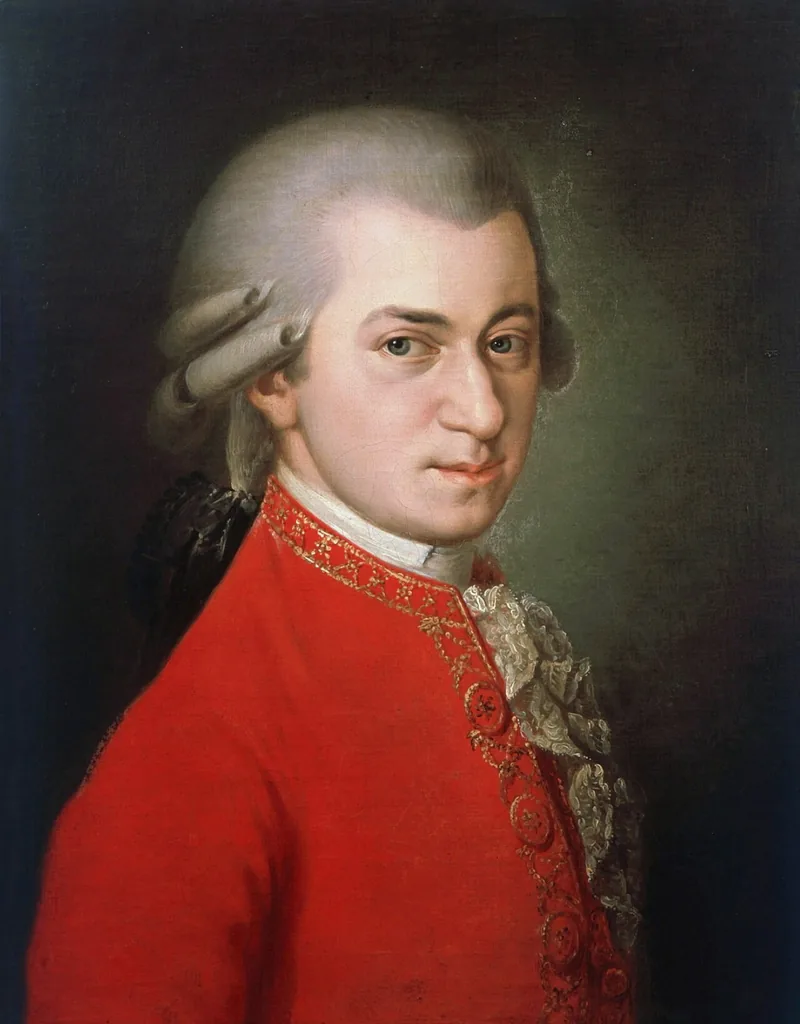
Mozart came to Vienna in 1781, quarrelled with his Salzburg employer and was dismissed. He chose to stay and lived there for the rest of his life. Most of the pieces a Vienna concert plays were written in that decade. He performed as a pianist, composed operas and chamber music and, in December 1787, became the emperor's chamber composer, writing dances for the annual balls. The city that shaped him is the reason a Mozart programme in a Vienna palace feels at home.
Figaro and the overture
Mozart's comic opera Le nozze di Figaro, to a libretto by Lorenzo Da Ponte, opened at the Burgtheater in Vienna on 1 May 1786. The organiser's sample programme includes its overture. An overture is the orchestra's opening piece for an opera, and a concert often plays one on its own as an opener. It is fast and light, and it sets the tone of an evening that moves quickly from piece to piece.
The serenade and the duet
Eine kleine Nachtmusik is a serenade for a chamber ensemble that Mozart finished in Vienna on 10 August 1787, during work on Don Giovanni. Nobody knows why he wrote it. Die Zauberflöte, The Magic Flute, opened at the Freihaus-Theater auf der Wieden on 30 September 1791 and was Mozart's last opera. It was an outstanding success from its first performances. The organiser's sample names the duet of Papageno and Papagena, a comic number for two singers.
Johann Strauss II and the waltz
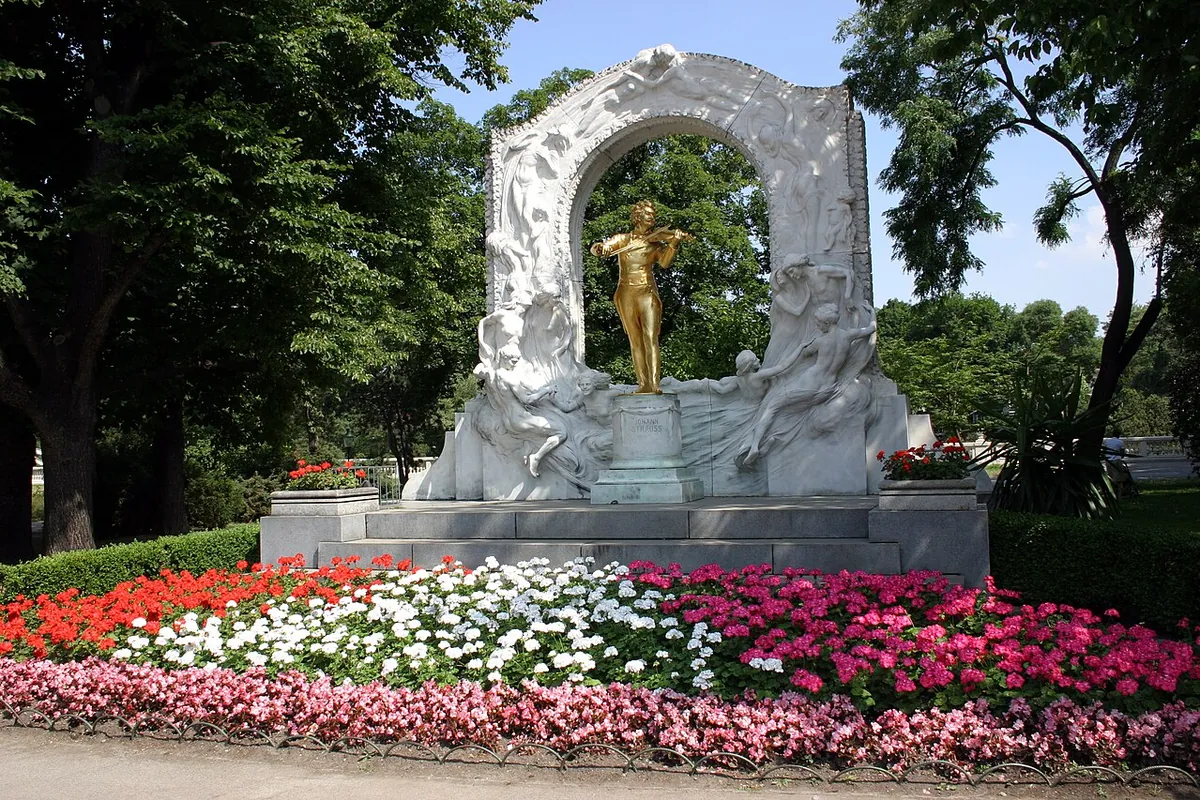
Johann Strauss II, born on 25 October 1825 and known in his lifetime as the Waltz King, wrote more than 500 waltzes, polkas, quadrilles, marches and other dance pieces, as well as operettas and a ballet. The waltz he popularised grew from the German dance and the Ländler in the later 1700s. The Viennese waltz is the original form and is danced faster than the slow waltz. A Strauss waltz gives the orchestra its most recognisable sound of the evening.
The Blue Danube
Strauss composed The Blue Danube in 1866, and it was first performed on 15 February 1867 at a concert of the Wiener Männergesang-Verein, as a choral piece. The first performance was only a mild success. Strauss then adapted it as a purely orchestral version for the 1867 Paris World's Fair, and that version became a great success. The orchestral version is by far the most often performed today, and the organiser's sample programme includes the Donauwalzer.
Operetta and Wiener Blut
Die Fledermaus, Strauss's best-known operetta, premiered at the Theater an der Wien on 5 April 1874. Wiener Blut is a later operetta from 1899, named after a Strauss waltz of 1873. It was made with Strauss's approval but without his participation, by reusing music he wrote for other works, compiled by Adolf Müller Jr. The organiser's sample programme names Wiener Blut, which shows how much of a Vienna programme is built from arrangements.
The other names on the page
The organiser's page names Vivaldi, Haydn, Mozart, Beethoven, Schubert, Johann Strauss Sr. and Jr., Brahms and Lehár, and pairs each with a signature work, such as Haydn's The Creation and Schubert's Unfinished Symphony. These are the composers the series draws on, not a list for one evening. A Vienna programme of this kind is chosen to give a taste of the city's classical tradition, so one evening may carry two or three of these names and the next a different three.
What changes from date to date
The organiser says the programme changes with the season and with the vocal soloists, and its page lists many more composers than these, among them Vivaldi, Haydn, Beethoven, Schubert, Brahms and Lehár. So treat every title above as a sample, not a promise. The printed programme, which the ticket includes, lists the pieces for your evening, and the calendar entry for your date is the best guide beforehand.
Frequently asked questions
Will I hear The Blue Danube?
The organiser's sample programme includes it, but the programme changes with the season and the soloists. The printed programme lists your evening's pieces.
Who wrote Eine kleine Nachtmusik?
Mozart completed it in Vienna on 10 August 1787.
Why is Strauss called the Waltz King?
Johann Strauss II earned the nickname in his lifetime for popularising the waltz in the 19th century.
Is the concert all Strauss and Mozart?
Those are the headline composers. The organiser's page also lists Vivaldi, Haydn, Beethoven, Schubert, Brahms and Lehár.
Sources